Executive Summary
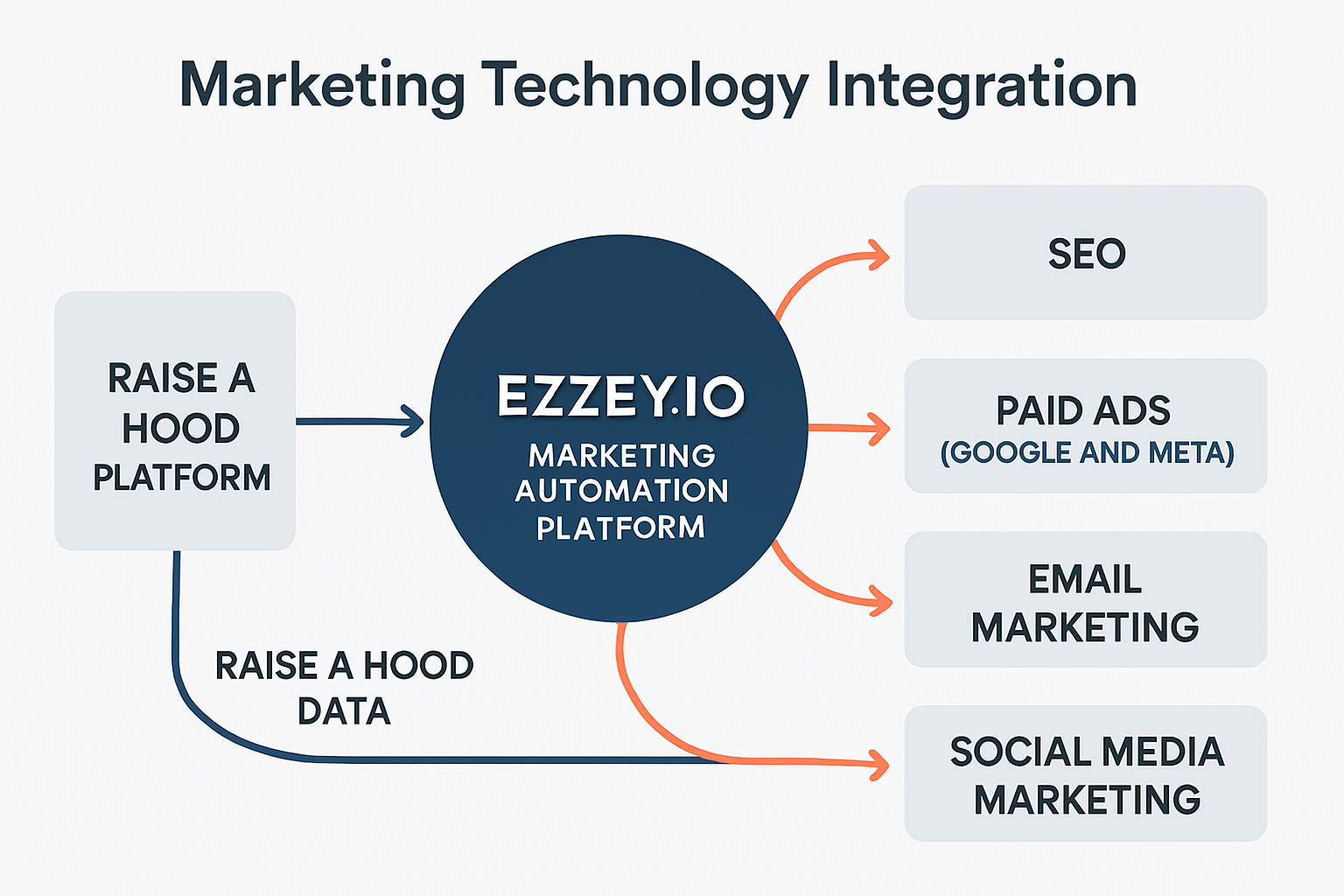
This proposal outlines a scalable infrastructure designed to power Raise A Hood's growth in partnership with Ezzey.io. The proposed infrastructure will provide a robust foundation for enhancing service delivery, leveraging data-driven insights, streamlining operations, and effectively executing marketing strategies. Key components include a deeply integrated system with Ezzey.io's marketing automation platform, advanced user and shop management capabilities, a dedicated data and analytics pipeline, and a flexible architecture to support the BOOST program, landing page solutions, and seamless calendar integration. This infrastructure is engineered for scalability, reliability, and security, enabling Raise A Hood to remove friction for auto repair shops, deliver innovative business solutions, and achieve significant market expansion. The ultimate aim is to position Raise A Hood as the indispensable solution for shop success, driving recurring revenue and establishing a strong competitive advantage.
Proposed Infrastructure Layout
Core Platform Architecture: Raise A Hood & Ezzey.io Integration
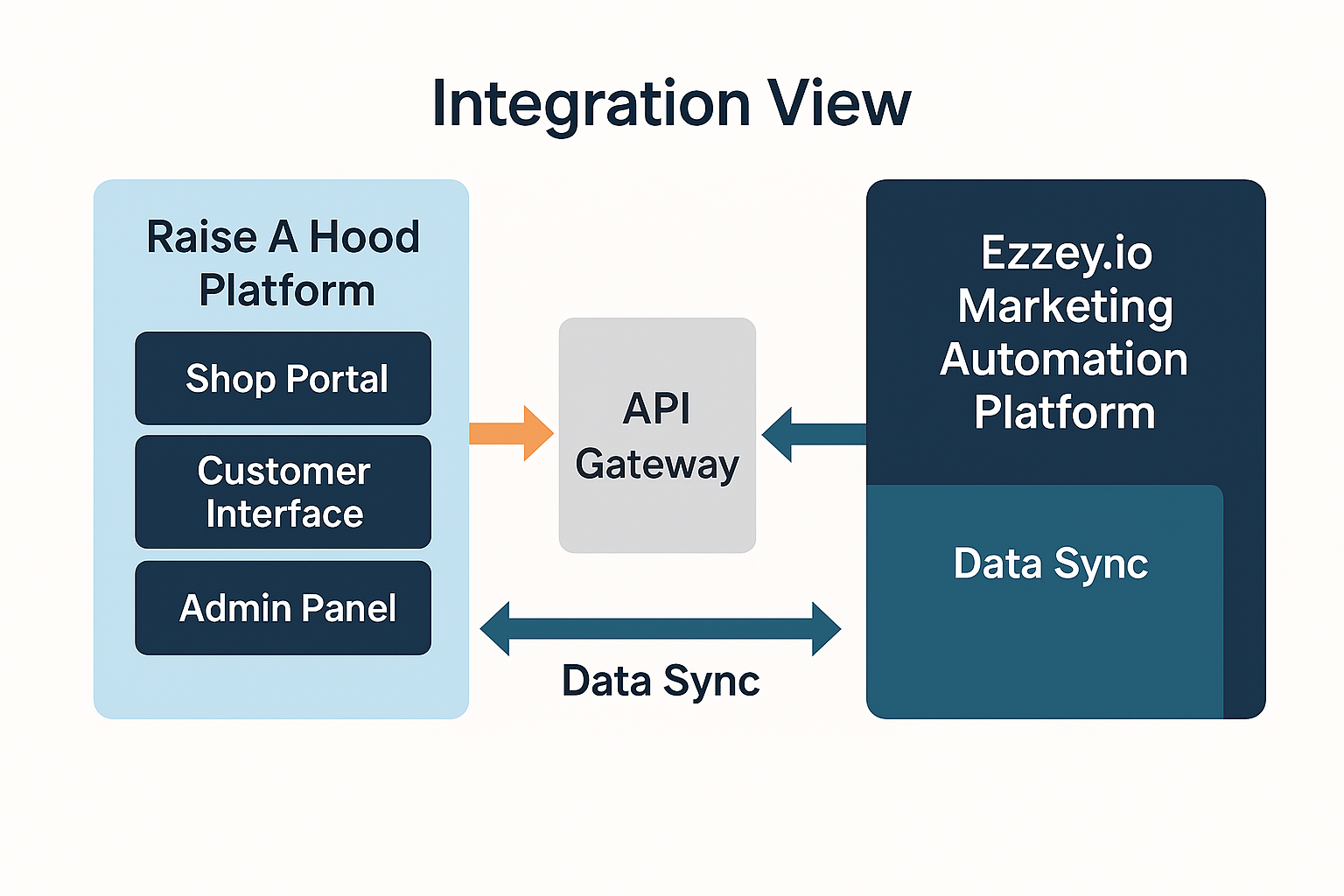
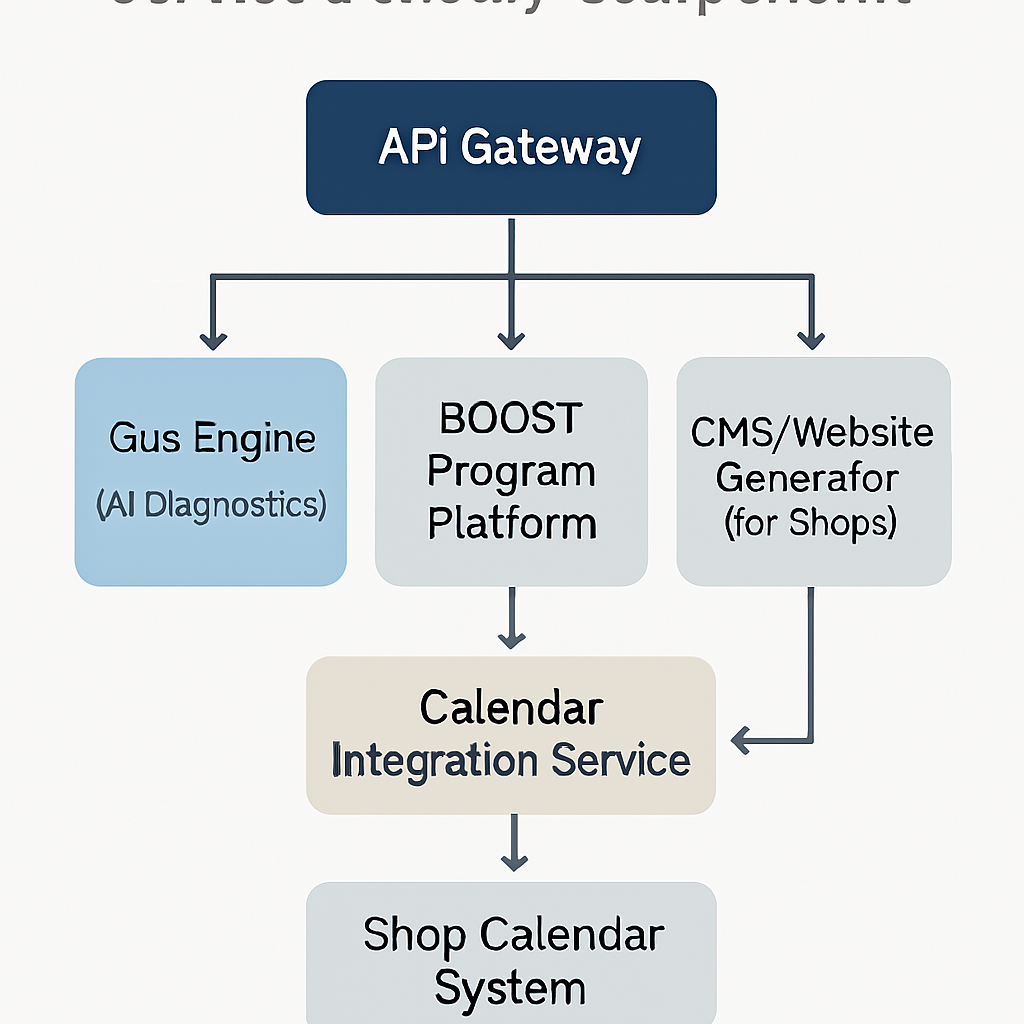
A microservices-oriented architecture is proposed, facilitating modularity and independent scaling of components. Central to this is a robust API gateway managing communication between Raise A Hood's core services, Ezzey.io's platform, and third-party integrations (e.g., calendar systems).
- Raise A Hood Core Services: Modules for shop onboarding, service management (including "Gus" component logic), BOOST program administration, and content management for landing pages.
- Ezzey.io Integration Layer: Dedicated services for synchronizing shop data, customer data, campaign information, and analytics between Raise A Hood and Ezzey.io. This ensures Ezzey.io has the necessary data for targeted marketing automation.
- Data Synchronization: Real-time and batch data synchronization mechanisms.
User & Shop Management Infrastructure
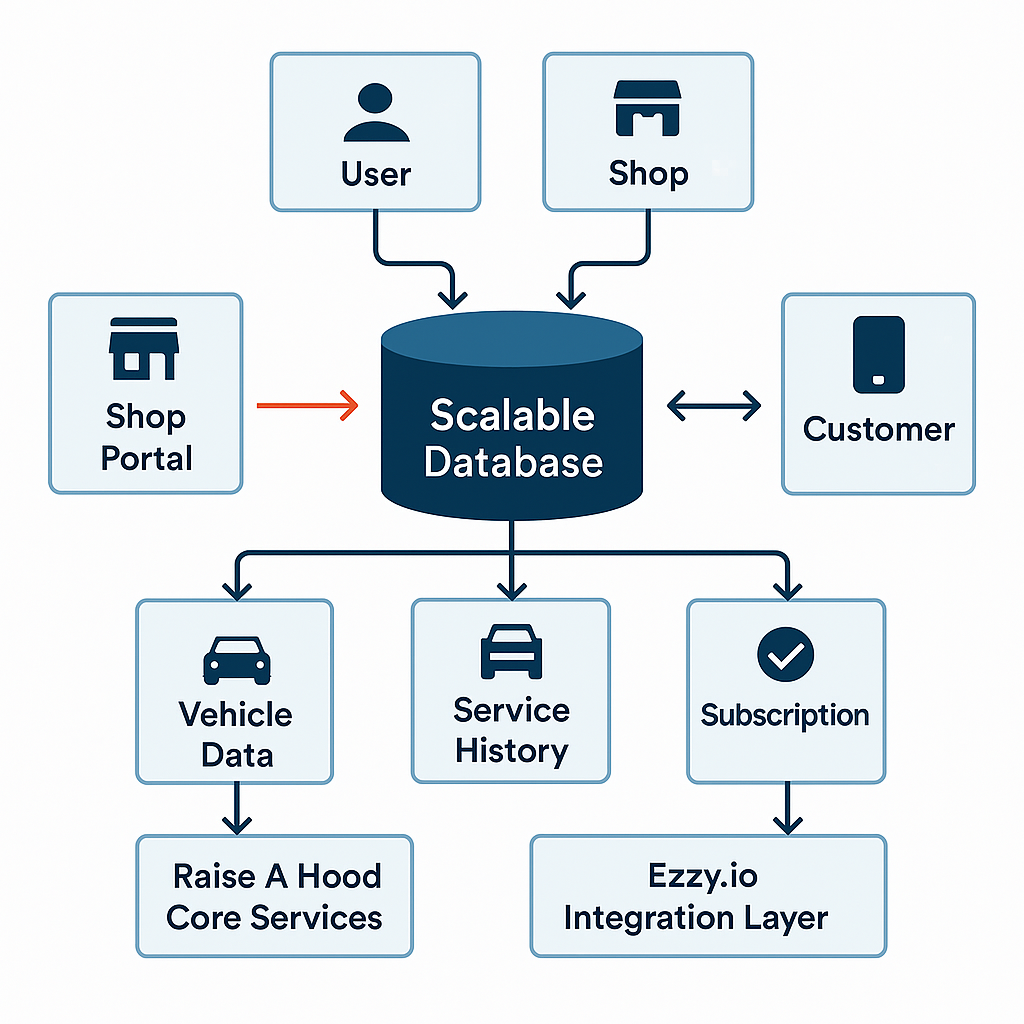
A centralized, scalable database system (e.g., PostgreSQL, MySQL on a managed cloud service like AWS RDS or Azure Database) to store comprehensive profiles for both end-users (vehicle owners) and partner shops.
- Identity and Access Management (IAM): Secure authentication and role-based access control (RBAC) for all users (admins, shop owners, staff, customers).
- CRM Functionality: While Ezzey.io provides marketing CRM, Raise A Hood's infrastructure will maintain core shop relationship data, service history, and potentially integrate with or supplement Ezzey.io's CRM for a holistic view.
Service Delivery & Operations Infrastructure
Components designed to deliver Raise A Hood's unique value propositions efficiently.
- "Gus" Component & Business Solutions Engine: A dedicated service or set of services that encapsulate the logic for the "Gus" diagnostic/advisory tool and other business solutions. This allows for independent updates and scaling.
- BOOST Program Platform: Infrastructure to manage BOOST program enrollment, content delivery, performance tracking, and communication with participating shops.
- Landing Page & Website Solutions: A dynamic content management system (CMS) or a static site generator pipeline integrated with version control (e.g., Git) and CI/CD for deploying customizable landing pages and websites for shops. Hosted on scalable cloud storage (e.g., AWS S3 + CloudFront, Netlify, Vercel).
- Calendar Integration Service: A microservice dedicated to handling integrations with various calendar systems (Google Calendar, Outlook Calendar, etc.) used by shops. This service will manage API connections, data mapping, and synchronization for appointments and scheduling.
Data & Analytics Infrastructure
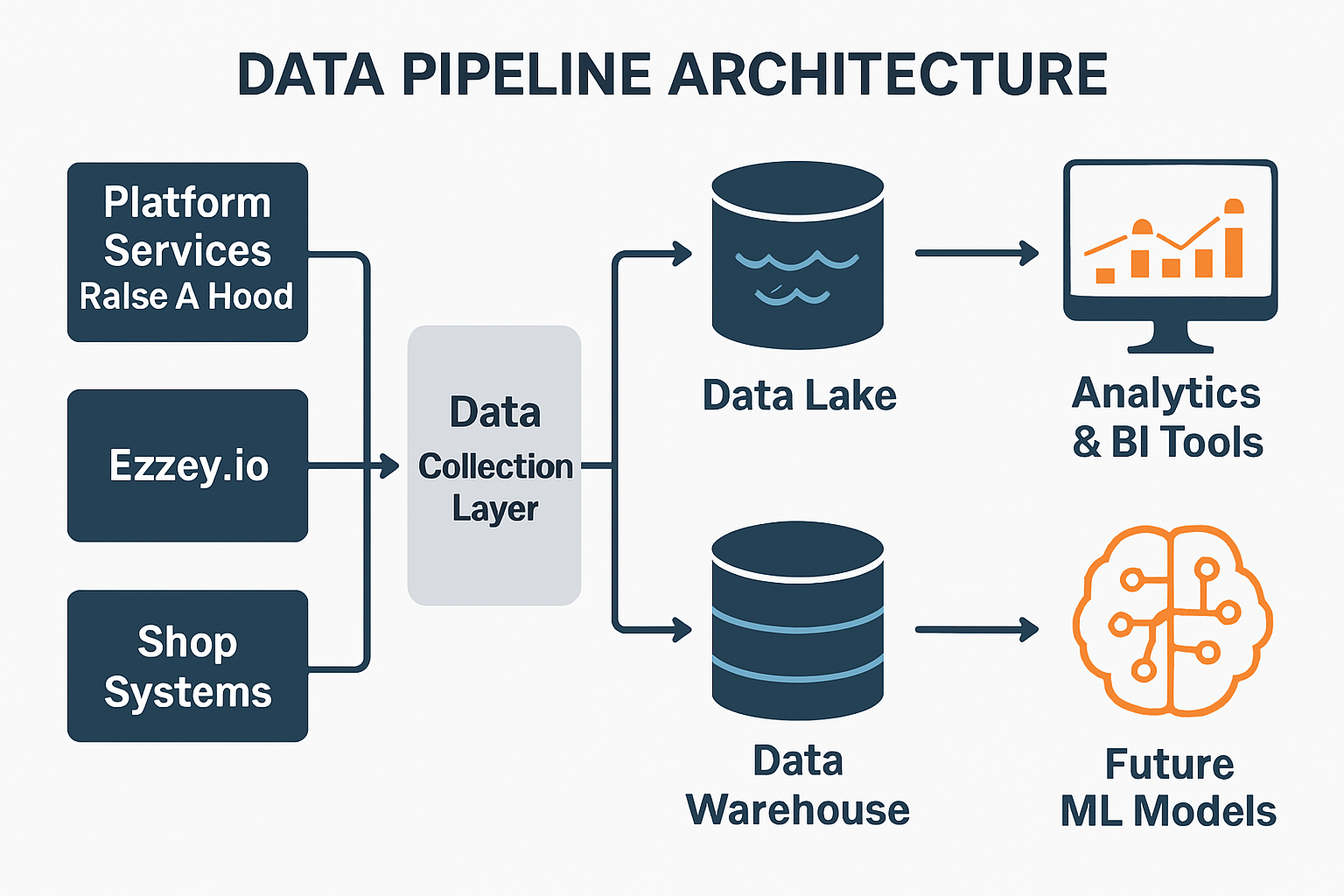
A robust data pipeline to collect, process, store, and analyze data from all parts of the platform, enabling data-driven decision-making and personalized experiences.
- Data Collection: Event-streaming (e.g., Kafka, AWS Kinesis) to capture user interactions, shop activities, marketing campaign events, and operational metrics in real-time.
- Data Lake & Warehouse: A data lake (e.g., AWS S3, Azure Data Lake Storage) for raw data storage and a data warehouse (e.g., Snowflake, BigQuery, Redshift) for structured, queryable data.
- ETL/ELT Processes: Automated pipelines for transforming and loading data into the data warehouse.
- Analytics & Business Intelligence (BI) Layer: BI tools (e.g., Tableau, Power BI, Looker) connected to the data warehouse for generating reports, dashboards (for Raise A Hood internal teams, shops, and potentially Ezzey.io for campaign insights), and ad-hoc analysis.
- Machine Learning (ML) Capabilities (Future): Foundation for future ML models (e.g., churn prediction, recommendation engines, fraud detection).
Marketing & Sales Enablement Infrastructure
Primarily leverages Ezzey.io's platform, but Raise A Hood's infrastructure will support and enhance these efforts.
- Ezzey.io Integration: Deep two-way data sync for customer segmentation, campaign triggering, and results tracking (SEO performance, paid ad conversions, email engagement).
- Content Delivery Network (CDN): For fast delivery of landing pages, website assets, and marketing content.
- Lead Management Support: APIs to ensure leads generated through various channels (including those managed by Ezzey.io) are correctly routed and tracked within Raise A Hood's system if necessary.